- 概要
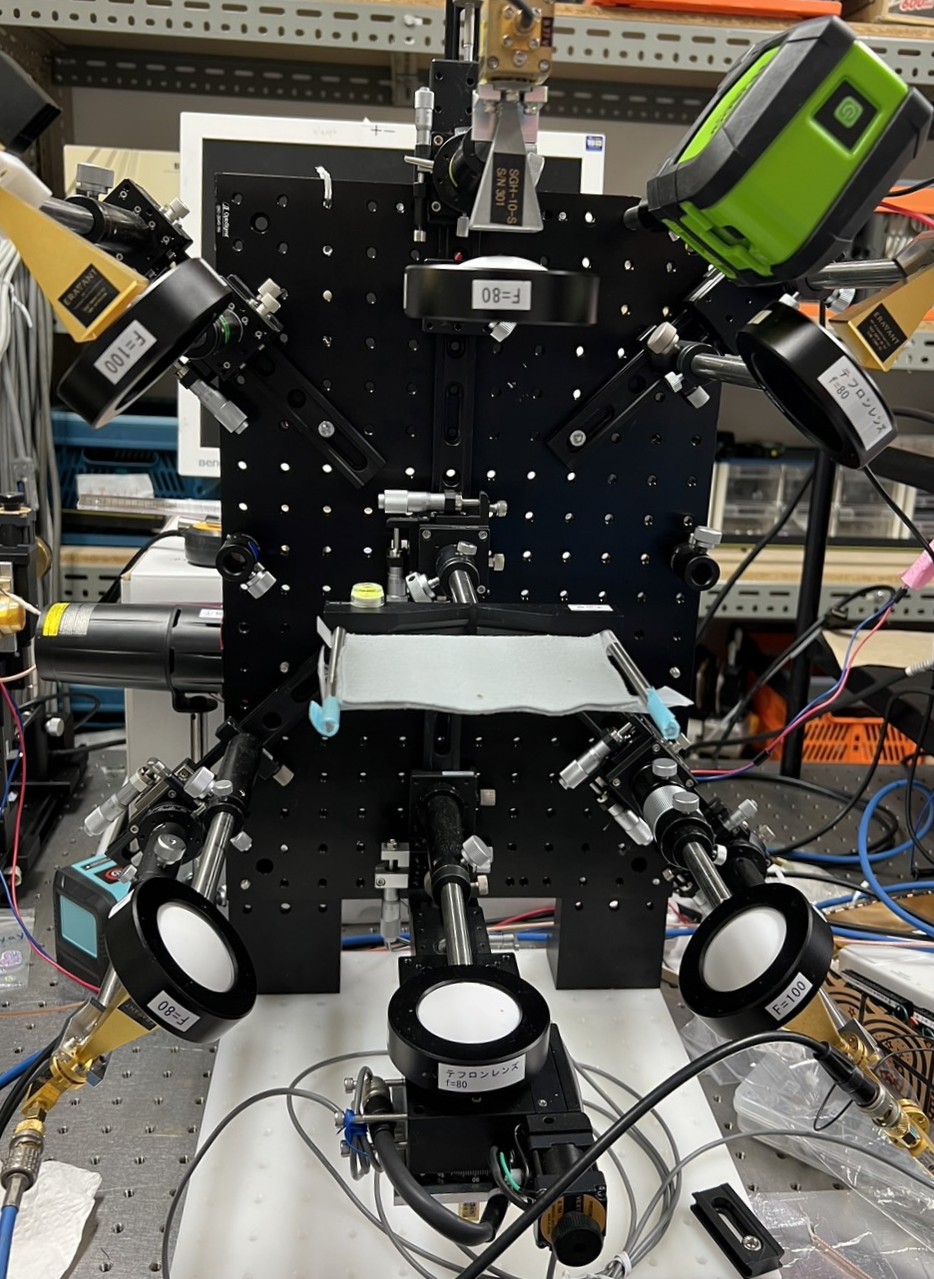
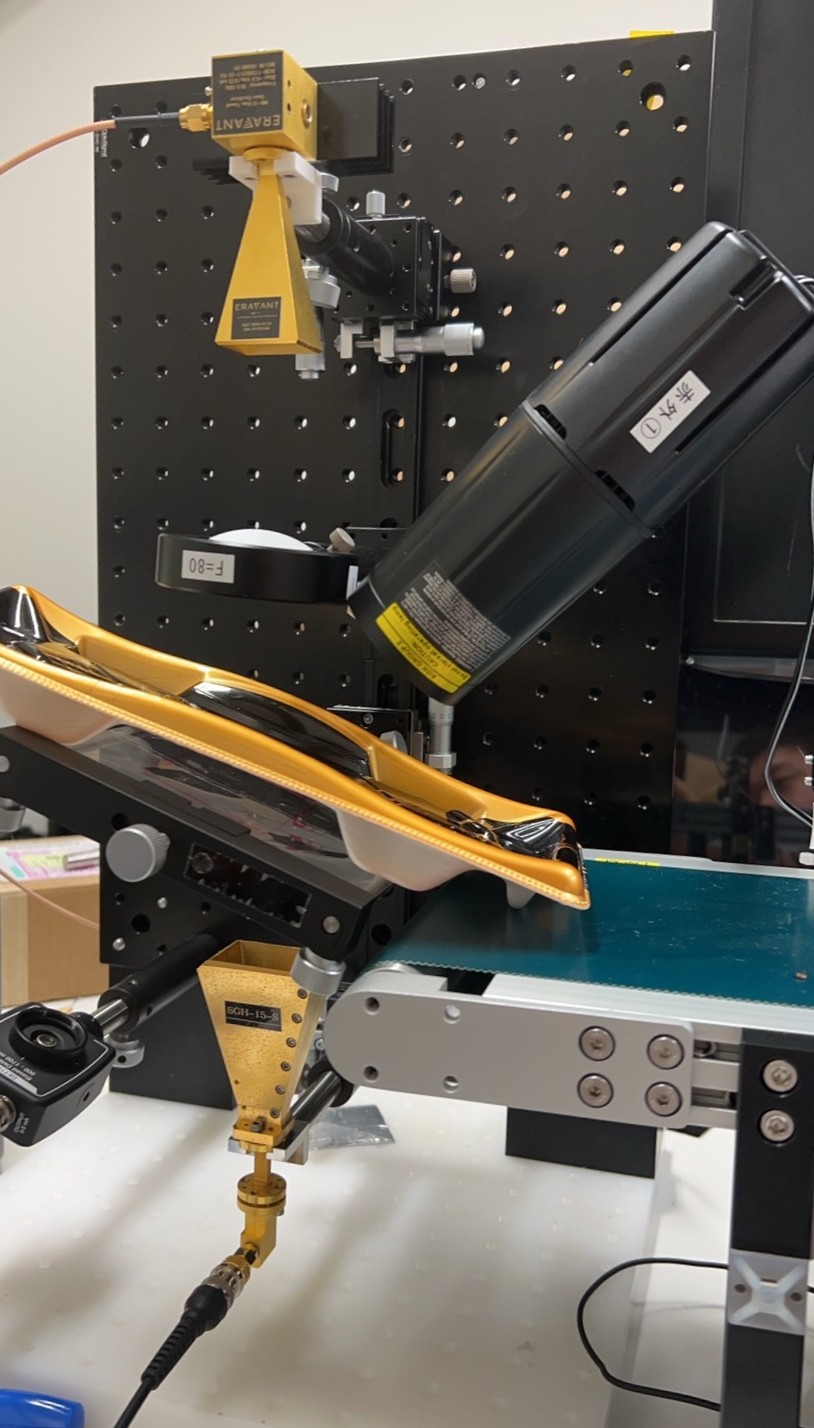
This research utilizes the characteristics of terahertz waves, used in next-generation communications and autonomous driving, to identify the materials of plastic waste. It improves existing recycling technologies and can be applied to evaluate the quality of recycled plastics, ensuring stable production of high-quality recycled plastics. It enables easy development of devices to solve various issues in containers and packaging and automobile recycling, contributing to the realization of decarbonization and a circular economy.
- 従来技術との比較
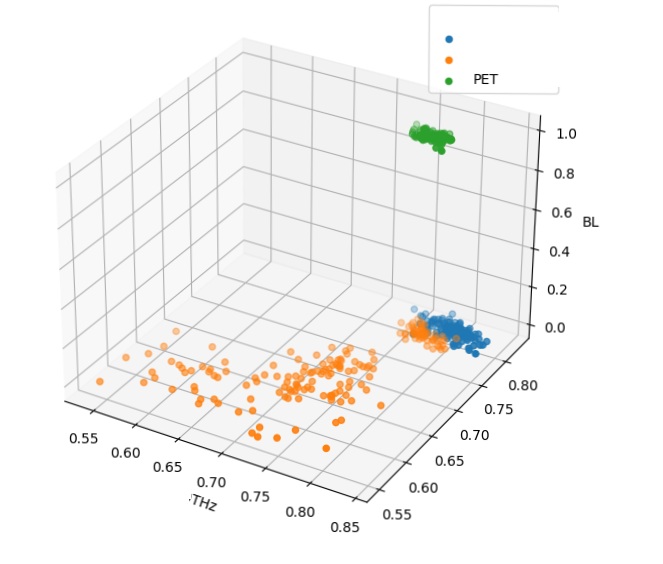
Conventional plastic waste identification and sorting technologies use specific gravity sorting or near-infrared devices. Particularly, near-infrared sorting technology has accumulated an enormous amount of data and serves as the primary sorting technology in plastic recycling plants. However, near-infrared devices struggle with identifying black plastics, additives, and degradation. This technology uses terahertz waves to measure and evaluate transmission and absorption characteristics, allowing for identification of black plastics, additives, and degradation.
- 特徴・独自性
-
- In recent years, there has been increasing global attention on plastic waste issues, such as marine pollution from drifting garbage and microplastics, the overseas export of plastic waste resources, and the increase in disposable containers like plastic bags and straws, especially due to the impact of COVID-19. There is growing demand for advanced identification and recycling of plastic waste materials, especially in the context of achieving the Sustainable Development Goals (SDGs) and realizing a circular economy.
- The research group from Tohoku University, Shibaura Institute of Technology, and Shizuoka University has conducted research on the commercialization of advanced sorting devices for plastic packaging waste. We have successfully identified mixed plastics containing black plastics, additives, and flame retardants, which were difficult to identify with existing devices, by utilizing the characteristics of terahertz waves. We have also confirmed the ability of terahertz waves in assessing degradation caused by UV or long-term use. Furthermore, the method has been shown to be effective for distinguishing bioplastics, which is expected to see increasing demand in the future, in addition to plastic waste from container packaging, automobiles, and home appliances.
- These identification technologies can be applied to properly sort plastic waste generated by the “The Plastic Resource Circulation Act,” enacted in 2022, contributing greatly to securing high-quality recycled resources through plastic waste resource recycling.
- Our research group conducts interdisciplinary research with experts in various fields: social engineering, resource circulation (Professor Jeongsoo YU), optical engineering (Professor Tadao TANABE of Shibaura Institute of Technology and Professor Tetsuo SASAKI of Shizuoka University), information science and big data analysis (Associate Professor Kazuaki OKUBO), data collection and analysis, international cooperation (Specially Appointed Lecturer Gaku MANAGO), social experiments, and behavioral economics (Assistant Professor Xiaoyue LIU). We address the needs from social, economic, and environmental issues both domestically and internationally, working from diverse perspectives to solve challenges and contribute to the creation of a sustainable society. Collaboration and networking with private companies, government agencies, research institutions, and civic organizations are also expected.
- 実用化イメージ
-
This technology can be applied to the development of plastic waste identification and sorting devices from processes such as containers and packaging recycling, automobile recycling, and home appliance recycling, as well as the production and quality evaluation of recycled plastics.
Researchers
Graduate School of International Cultural Studies
Jeongsoo Yu
|
- 特徴・独自性
-
- We have revealed relationships among brain structure, brain function, lifestyle, genetic factor, and cognitive function using brain magnetic resonance imaging (MRI) database. The goal of our project is to prevent several diseases and disorders such as dementia by performing personalized medicine using the large brain MRI database.
- 実用化イメージ
-
Our research is related with several industrial fields such as food, sleep, and other lifestyle industries. In addition, our research is also related with medical field such as preventing medicine and brain check-up.
Researchers
Institute of Development, Aging and Cancer
Yasuyuki Taki
|
- 特徴・独自性
-
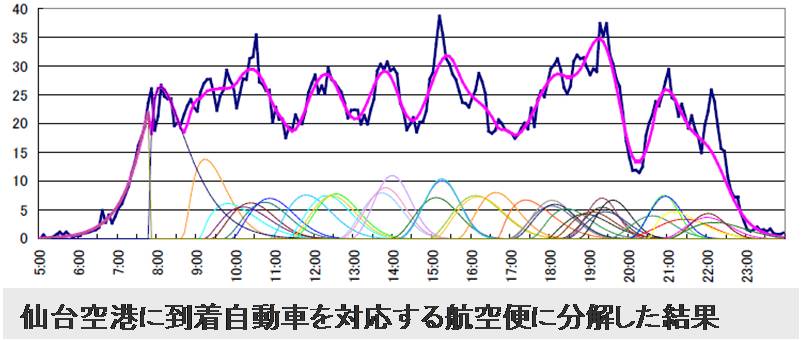
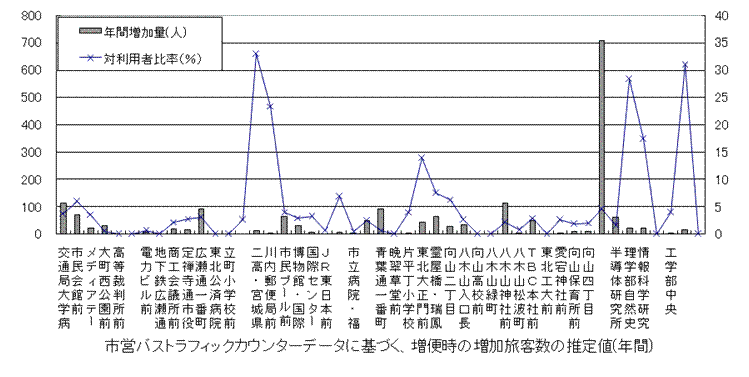
- We have proposed advanced methods of behavior analysis for public transport service.
- They include a demand composition based on the automatically mesured traffic data, estimation of true demand partly unrealized by the congestion, and intense usage of geographical data. These methods may be applicable for behavior analysis besides transport service.
- 実用化イメージ
-
We welcome cooperative research on demand analysis of public services, as well as needs analysis for new goods and services.
Researchers
International Research Institute of Disaster Science
Makoto Okumura
|
- 概要
Computational social science seeks to understand social phenomena and human behavior using advanced computational methods, including machine learning, simulations, and digital experiments. The field covers a wide range of topics—from opinion formation on social media to spatial social segregation, where different social groups are geographically separated—and actively explores new possibilities offered by innovative generative AI technologies, such as large language models. In this term, it aims to contribute both to establishing a new research framework and to solving practical social issues.
- 従来技術との比較
A key advantage of computational social science methods lies in their ability to dynamically and accurately capture complex social phenomena and human behavior, overcoming limitations of traditional social sciences that primarily rely on small-scale surveys and static data.
First, by directly analyzing the vast amounts of behavioral data generated daily, it becomes possible to understand large-scale, high-granularity social processes that were previously difficult to grasp. Second, the use of computational methods allows for the discovery of complex patterns and the structure of new social phenomena that might be overlooked by human intuition or conventional theories alone. Third, by combining simulations and digital experiments, the field has moved beyond mere description and correlation analysis to verifying causal mechanisms and future scenarios.
In this way, computational social science complements traditional methodologies and possesses the advantage of developing social science into a discipline that contributes to solving social problems.
- 特徴・独自性
-
- This field is positioned as a new research framework that integrates social science and information science. It establishes the subject and direction of analysis based on theoretical considerations from social science, then verifies and develops those theories through empirical analysis and simulations that utilize computational techniques and big data.
- 実用化イメージ
-
By leveraging information technology and big data to examine diverse social phenomena and human behavior, the field offers valuable knowledge and expertise for understanding current societal conditions and for designing and evaluating effective intervention strategies.
Researchers
Graduate School of Arts and Letters
Lyu Zeyu
|
- 概要
Evaluating the effectiveness of social policies and business strategies through rigorous scientific methods—and improving them based on empirical evidence—is a pressing challenge across the public sector, private enterprises, and local communities. In Japan, the promotion of Evidence-Based Policy Making (EBPM) has recently gained attention; however, its practice remains largely confined to traditional administrative data, while the diverse and rich resources held by corporations and local communities remain underutilized. Building mechanisms that enable collaboration among public, private, and academic sectors is essential for sharing knowledge that contributes to solving societal challenges.
This research employs econometric methodologies to assess the causal impacts of policies and programs implemented by governments and corporations, linking the findings to real-world applications. By integrating administrative records with diverse private-sector data—including consumption, labor, education, and health—this study seeks to generate robust evidence and contribute to the advancement of evidence-based policy and strategy formulation.
- 従来技術との比較
Conventional policy evaluations and social surveys have often relied on descriptive statistics and case studies, which have limited capacity to identify generalizable causal relationships. Likewise, corporate initiatives have only rarely been subject to systematic and rigorous impact evaluation. This research employs econometric causal inference methods—such as regression discontinuity design, instrumental variables, and event studies—and applies them to both large-scale administrative data and non-traditional (“alternative”) data. Compared with conventional correlation-based analyses, this approach enables more robust and practically relevant evaluations of causal effects.
- 特徴・独自性
-
- Diverse Data Integration: Integrates administrative, corporate, and community data—regardless of type or continuity—to comprehensively evaluate policy and program impacts.
- Rigorous Causal Inference: Applies advanced econometric methods, such as regression discontinuity design and instrumental variables, to provide evidence that goes beyond simple correlations.
- Cross-Sectoral Applicability: Offers applicability across education, labor, welfare, urban policy, and consumer behavior.
- Social Implementation: Directly links research outcomes to policy improvement and corporate strategy design, fostering implementation through industry–government–academia collaboration.
- Capacity Building: Provides training in statistics and econometrics for municipal officials and corporate analysts, helping them build sustainable, data-driven decision-making cycles.
- 実用化イメージ
-
Public Sector: Provides scientific evidence for addressing educational inequality, designing welfare systems, labor market interventions, and urban environmental policies, thereby supporting the effective allocation of public resources.
Private Sector: Evaluates employee welfare programs, health management, workplace reforms, and reskilling initiatives, offering insights for sustainable and competitive strategic planning.
Society as a Whole: Builds sustainable and efficient social systems by integrating data and knowledge across governments, firms, and academic institutions.
Researchers
Graduate School of Economics and Management
Yuta Kuroda
|


 Medical
 Life Sciences
 Information Communication
 Environment
 Nanotechnology / Materials
 Energy
 Manufacturing Technology
 Social Infrastructure
 Frontier
 Human and social sciences