Sorted by Keyword - 2095 word(s), 229 profile(s)

 O

[ inhibitors]

Development and evaluation of various inhibitors and disinfectants for SARS-CoV-2

NEXT
PREV
特徴・独自性
  • Using the infectious SARS-CoV-2 (severe acute respiratory syndrome coronavirus-2), we are evaluating and developing new therapeutic drug candidates as well as evaluating disinfectants. Further analyses such as mechanism of action and resistance may be applicable. Other pathogens, including influenza virus and drug-resistant bacteria, will be examined upon request and discussion. Through joint and collaborative research with domestic and overseas pharmaceutical companies and related companies, we have experience of their clinical application including basic research.
実用化イメージ

We support development and evaluation of various inhibitors and disinfectants for variants of SARS-CoV-2 as well as wild type.

Researchers

International Research Institute of Disaster Science

Eiichi Kodama

[ language use]

Universal Design in Language Use

NEXT
PREV
概要

My current research topic is "universal design in language use," with special reference to order in language and thought. In particular, I am investigating (1) similarities and differences in neural processing of languages with different basic word orders, (2) to what extent the order in non-verbal thought is affected by the order in language, and vice versa, and (3) what is the optimal order in human language and human thought, if any.

従来技術との比較

Many studies have reported that subject-object (SO) word order, where the subject (S) precedes the object (O), tends to have lower processing costs and is preferred by native speakers compared to object-subject (OS) word order. However, traditional studies have primarily focused on SO languages, such as Japanese and English, where SO word order is the grammatical default. As a result, it remains unclear whether the preference for SO word order reflects the basic word order of individual languages or more universal cognitive characteristics of humans.

特徴・独自性
  • To address this, we are conducting research on the cognitive processing of minority languages that use object-subject (OS) word order as their basic word order—specifically Kaqchikel and Truku, which have not been studied before. This research focuses on the relationship between “word order in language” and “order of thought.” The findings are then compared to the cognitive processing of Japanese and English.
  • For this purpose, experimental equipment is brought to the speakers’ regions (Guatemala and Taiwan) to conduct a variety of investigations and experiments, including behavioral experiments, eye-tracking, and brain function measurements. Additionally, for experiments requiring large, non-portable equipment such as MRI scanners, the speakers are invited to Japan for the studies.
実用化イメージ

Although I am conducting basic research, I believe it helps develop (1) effective language teaching/learning methods, (2) rehabilitation programs for aphasia, (3) dynamic preservation of endangered languages/dialects, and so on.

Researchers

Graduate School of Arts and Letters

Masatoshi Koizumi

[ single crystal growth]

Development of Novel Scintillator and Piezoelectric Crystals

NEXT
PREV
特徴・独自性
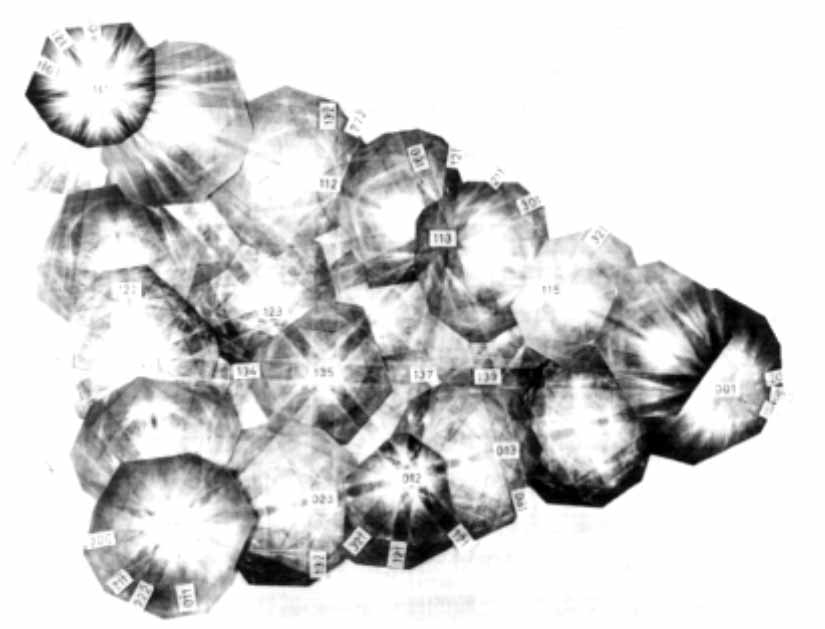
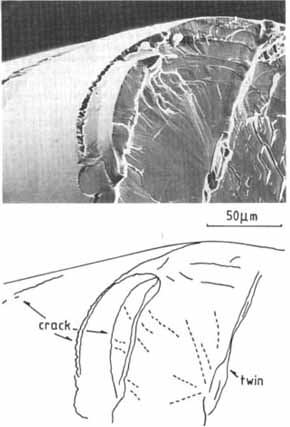
  • Our research target is mainly focused on the topic of development of novel scintillator crystals, piezoelectric crystals, growth technology, characterization and its device application.
  • We design and synthesize new materials from a view point of Crystal Chemistry, and investigate their structure and physical properties. We also study on photo-detector, as suitable photo-detector fully contribute to get maximum signal from scintillator. This activity is very important to realize practical application of our developed materials. Recently, piezoelectric material and high melting temperature alloy project is also started.
実用化イメージ

For the purpose of "real" contribution to human culture, we are always carrying out our research activity considering the industrial application. This point is unique feature of our attitude toward science.

Researchers

Institute for Materials Research

Akira Yoshikawa

 3

[3D]

Interactive Content to Enrich Our Lives

NEXT
PREV
特徴・独自性
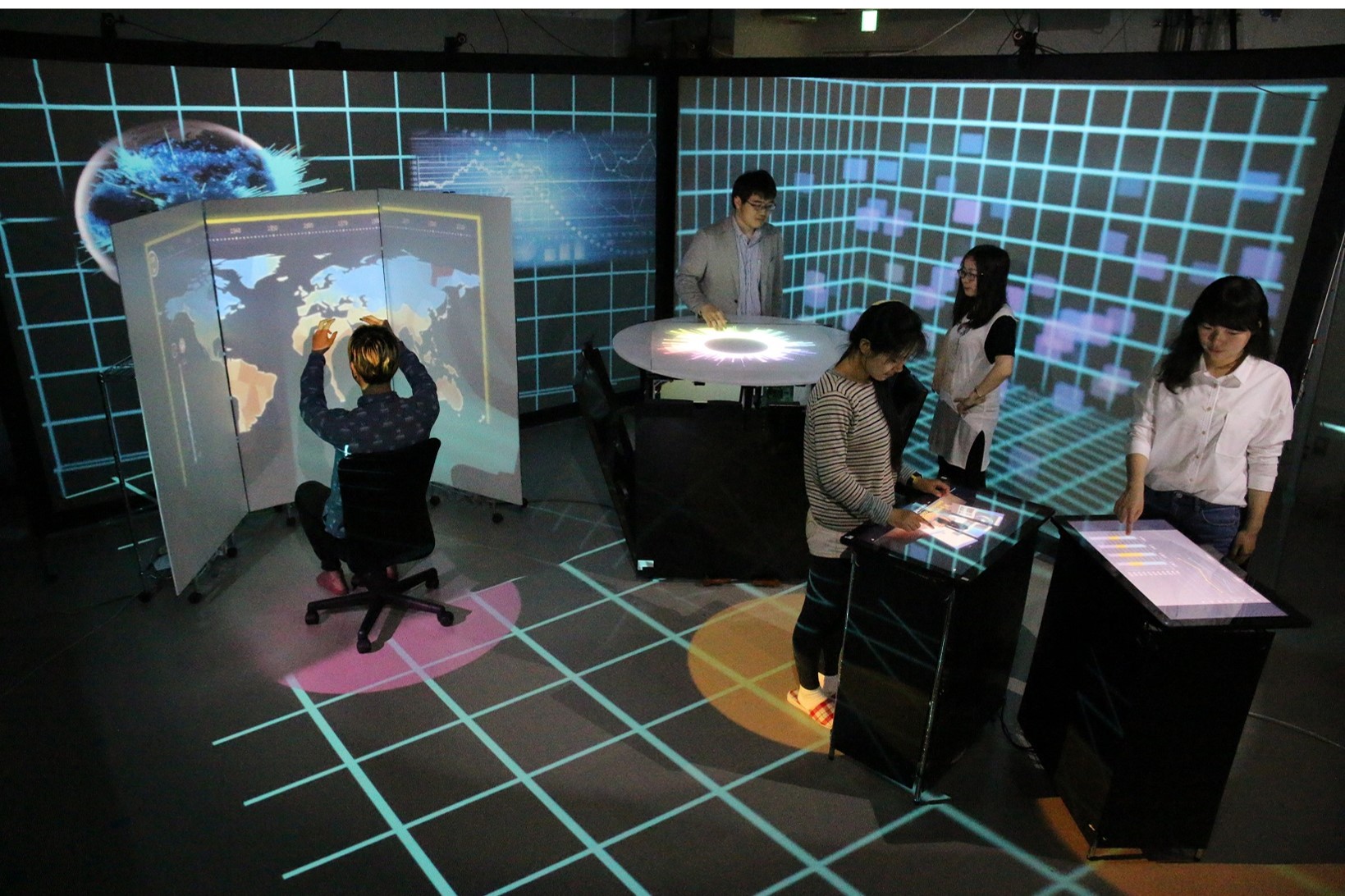
  • (1) Displays and Interactive Techniques
  • Designing original display systems to show visual information accurately and effectively, and interaction techniques to make better use of these display systems.
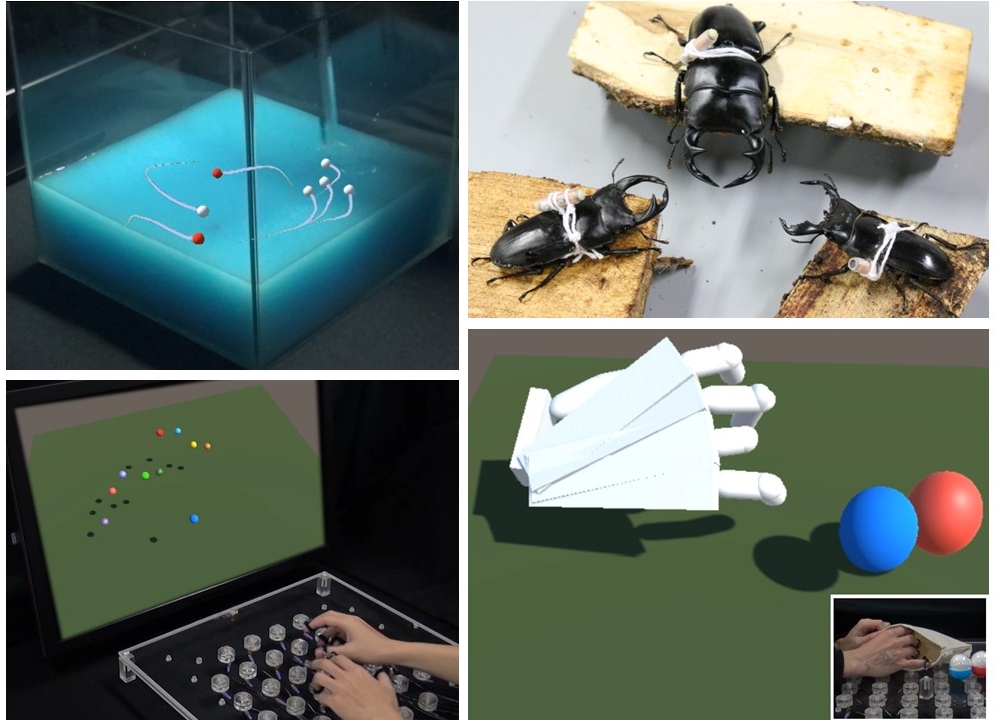
  • (2) Interactive Video Content
  • Creating new interactive content from real video taken by cameras and computer-generated animations.
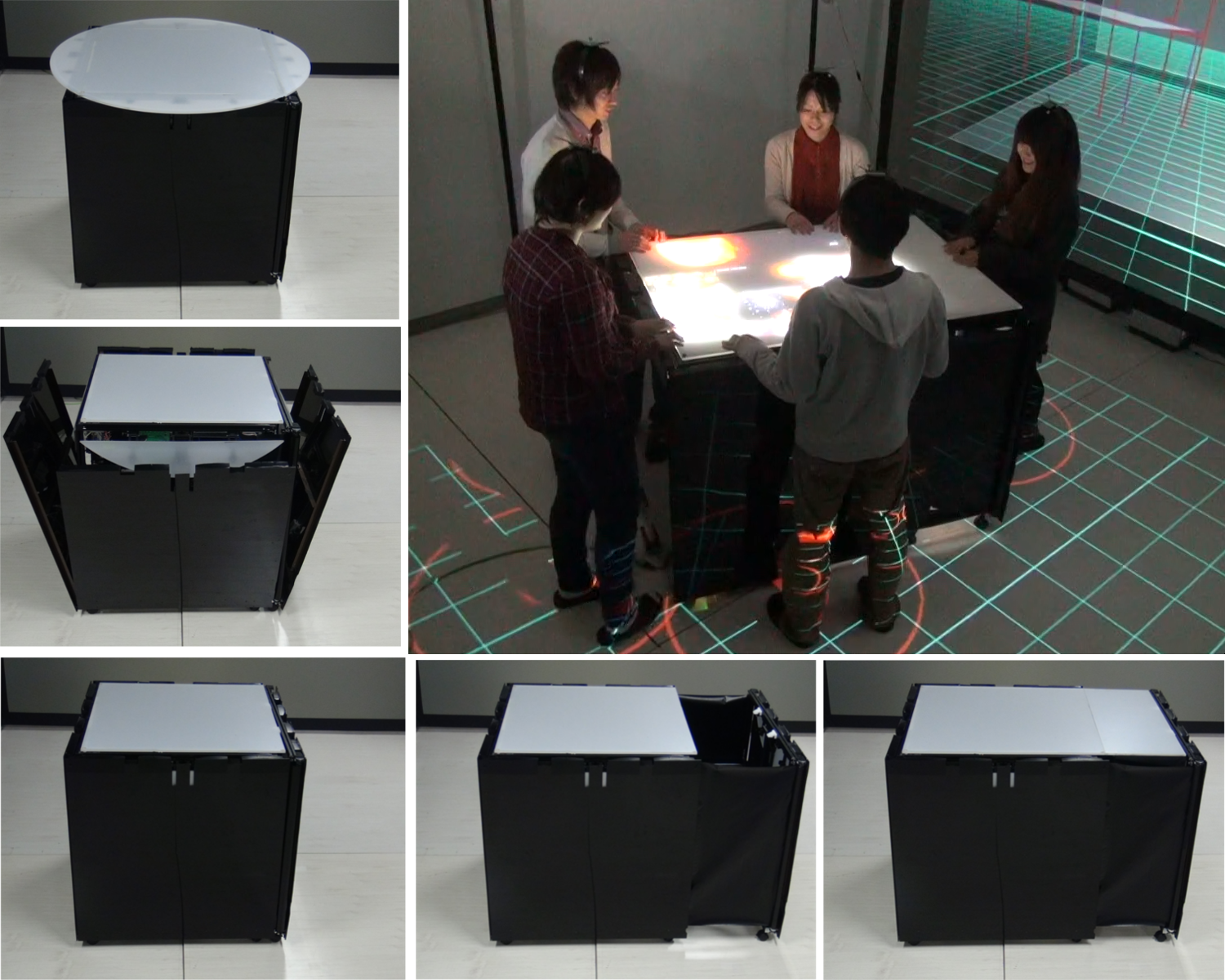
  • (3) Modeling and Controlling the “Atmosphere” in a Conversation Space
  • Aiming to stimulate the “atmosphere” in a conversation space by supplying real-time feedback to the users, we are exploring means of sensing and analyzing change in the space.
  • (4) Designing and Evaluating Novel Interaction Techniques
  • Designing and evaluating novel interaction techniques on target selection for variety types of displays including large and touch displays.
実用化イメージ

Researchers

Research Institute of Electrical Communication

Yoshifumi Kitamura

[3D Display]

Development of the high-quality and low-power display system for ultra-realistic communications

NEXT
PREV
特徴・独自性
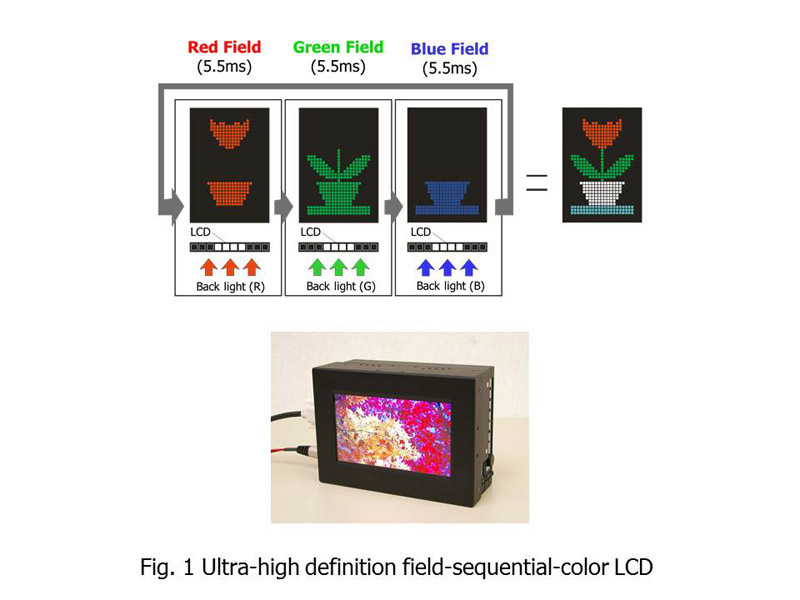
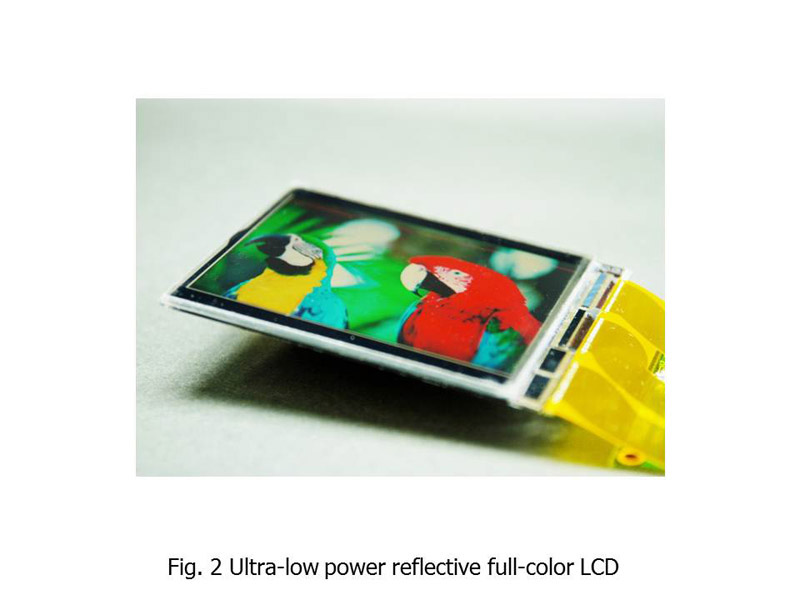
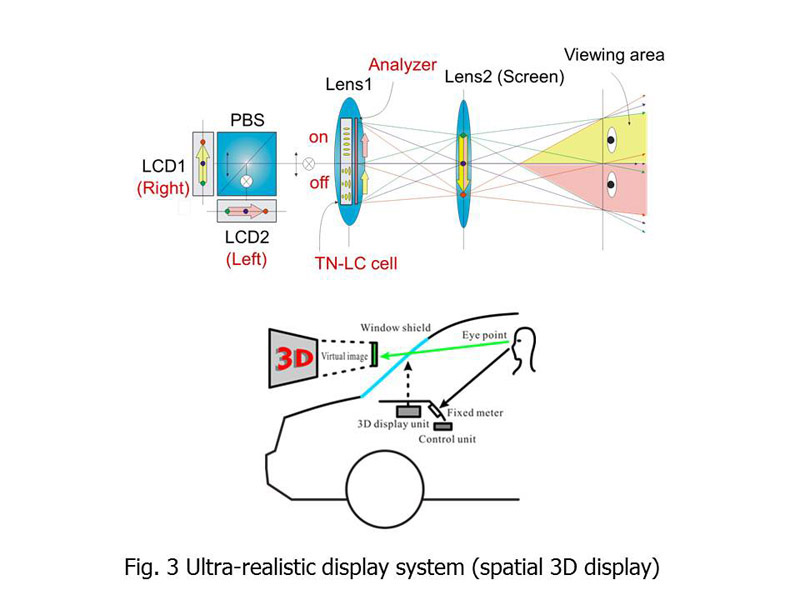
  • Recently, with a spread of high definition video streaming services and ubiquitous network, development of high-quality, ultra-realistic and low-power display systems has been demanded. We have been studying physical properties of liquid crystal materials, precise control technique of polarization, high performance liquid crystal display (LCD) devices and its application to the advanced display systems for the realization of new media such as electric paper display and digital signage display, and low-energy society. We established a polarization control technology which realizes a precise control of polarization with liquid crystal materials. By using this world-leading technology, we have been studying the control of the surface alignment of liquid crystal molecules and developed a wide-viewing angle and fast switching liquid crystal display, ultra-high definition field-sequential-color display (Fig. 1), ultra-low power reflective full-color display (Fig. 2) and large-size high-quality display system.
  • We are also studying the ultra-realistic display systems such as a spatial 3D display and a multiple directional viewing display based on the precise light control technique as a next generation interactive communication technologies (Fig.3). We hope to conduct collaborative research with a willing company for a practical application of this technology in industry.
実用化イメージ

Researchers

Graduate School of Engineering

Takahiro Ishinabe

[3D Integrated Circuit]

Novel-Concept Silicon Integrated Circuits Derived from the 3-Dimensional Device, Circuit and Architecture

NEXT
PREV
特徴・独自性
  • In recent year, facing the age of nanoscale engineering, the new technologies of device, circuit and architecture supported by novel physical guidance principles are highly expected, just as the similar situation as the predawn of semiconductor technology when Bardeen and Shockley discovered the secret of transistors. Therefore, in our research approach, the architectures, circuits, devices and CAD design tools for nanoscale LSI are systematically investigated in the following three main research subjects.
  • 1. Study on nanoscale device and circuit
  • Aiming at the nanoscale silicon semiconductor integrated circuit, we are mainly working on the following directions for new devices and circuits:
  • ①Analysis for novel physical phenomenon based on nanostructural effects
  • ②Device and circuit technology with new operating principle
  • ③Restraint technology for increasing variability of device characteristics
  • ④Architecture and circuit technology for robust information processing
  • 2. Study on the 3-dimention-structual device and circuit
  • The elementary element of recent LSI with planar-structural devices is coming close to the physical limitation of scaling. In order to break the limit and sustain the evolution of future LSI performance, we have started the research on the novel 3-dimension-structural devices and circuits.
  • 3. research on wireless integrated circuit (IC) based on information transmission
  • The ultracompact lightweight wireless IC is one of essential technologies for realizing the ubiquitous society which has the network available in anywhere, at anytime and from any surrounding items. For example, the IC tags for receiving information with reading function are getting close to the practical applications. In our laboratory, aiming at the automatic operating wireless IC with embedded power supply, we are systematically working on the following directions:
  • ①The electrical power generation and storage devices
  • ②Devices and circuits with Ultralow power consumption
  • ③Sensing devices
  • For all above subjects, We hope to conduct collaborative researches with companies interested in our research.
実用化イメージ

Researchers

Graduate School of Engineering

Tetsuo Endoh

[3D Measurement]

High-Speed Vision for Real-Time Motion Analysis

NEXT
PREV
特徴・独自性
  • We are investigating high-speed vision systems that enable real-time image acquisition and visual processing at frame rates substantially higher than the standard video rate.
実用化イメージ

High-speed vision systems are useful for fast measurement and control of dynamic systems in general. When combined with external facilities such as high-speed projectors or acceleration sensors, they enable further wider applications including fast 3D measurement or object identification.

Researchers

Unprecedented-scale Data Analytics Center

Shingo Kagami

[3D printing]

Additive Manufacturing of Metallic Parts with Electron Beam Melting (EBM)

NEXT
PREV
特徴・独自性
  • Electron beam melting (EBM) is a type of additive manufacturing technologies. EBM uses electron beam as an energy source to melt metal powder and produce metal thin layers. This sequence is repeated in a layer-by-layer manner to fabricate three-dimensional (3D) components.
  • This technology can produce any kinds of structures based on 3D CAD models and is suitable for custom-made manufacturing.
  • In addition, our recent studies revealed that the unique microstructure, such as directional solidification and uniform dispersions of fine precipitates, are obtained by EBM; this technology is useful to realize advanced materials that cannot be obtained conventional manufacturing.
実用化イメージ

The EBM technology has received much attention for producing metal parts used in biomedical, aerospace and automotive industries.
Rapid prototyping / rapid tooling is one of the applications of this technology.

Researchers

New Industry Creation Hatchery Center

Akihiko Chiba

Advanced Nanotechnology for Critical metal free secondary battery

NEXT
PREV
特徴・独自性
  • Monoatomic layered materials of Graphene, Transition metal sulfide nanosheet, nanocrystalline active materials, nanoparticles and nanoporous materials are investigated for realizing high capacity, high power, high safety and low cost energy storage devices as a post- Lithium ion battery. Advanced chemistry of functional materials and device processes for All solid state battery, Magnesium battery, fuel cells, supercapacitor and wearable batteries are investigated.
実用化イメージ

Academia – Industry collaboration with manufacturing companies of functional materials, batteries, and also smart grid, renewable energy, electrical power companies are encouraged for developments of advanced energy materials and post-Lithium ion battery.

Researchers

Institute of Multidisciplinary Research for Advanced Materials

Itaru Homma

Bioimplants that are as close to natural teeth as possible

概要

By applying nanoscale surface modification to individually designed 3D-printed titanium implants based on CT data, a biomimetic microenvironment is recreated, enabling regeneration of periodontal ligament-like tissue through host stem cell induction. This provides a novel treatment approach without cell transplantation for cases where existing implants are difficult to adapt.

従来技術との比較

Conventional implant treatment assumes direct bonding with bone, thus disregarding the regeneration of periodontal tissues such as the periodontal ligament. Furthermore, some patients avoid treatment due to concerns about bone-cutting surgery and multiple invasive procedures. This technology utilizes a nano-surface to induce stem cells, forming periodontal tissues similar to natural teeth. This enables the restoration of natural occlusal sensation through a single minimally invasive procedure.

特徴・独自性
  • Custom-designed for each patient's root morphology, it reproduces natural force transmission and chewing sensation. Furthermore, by utilizing nanostructures to control cell adhesion and differentiation, it enables periodontal tissue reconstruction without the need for cell transplantation or regenerative factor administration.
実用化イメージ

In the future, we aim to collaborate with implant manufacturers to advance mass-production prototyping and quality evaluation, targeting practical application as a medical device. We also seek partnerships with companies and management talent who can jointly undertake strategic planning and clinical deployment for commercialization.

Researchers

Graduate School of Biomedical Engineering

Masahiro Yamada

[3D-LSI/TSV]

Development of Biomedical Micro/Nano Integrated System Using LSI Technology

NEXT
PREV
特徴・独自性
  • Semiconductor neural engineering is a discipline that uses semiconductor process/device/circuit technologies to further understand properties of neural systems and to create novel fusion systems of living body and machine.
実用化イメージ

One of the goals in this laboratory is to establish semiconductor neural engineering and develop biomedical micro/nano integrated systems.
Another goal is to educate the next generation of leaders in biomedical engineering through research including:
1. Intelligent Si neural probe and biomedical signal processing LSI
2. Fully-implantable retinal prosthesis system
3. Bio/nano technology and novel Bio-FET sensor
4. 3-dimensional integration technology and analog/digital LSI design

Researchers

Graduate School of Biomedical Engineering

Tetsu Tanaka